Colorful Halloween Patterns Bundle 3
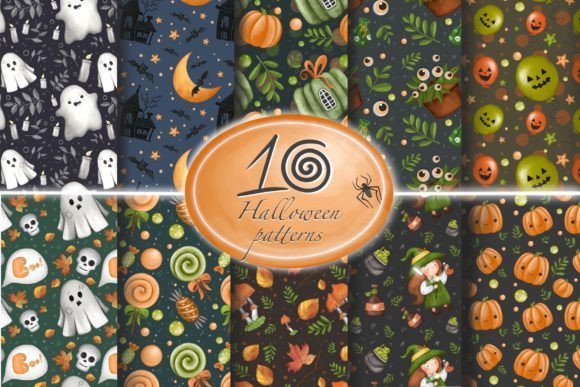
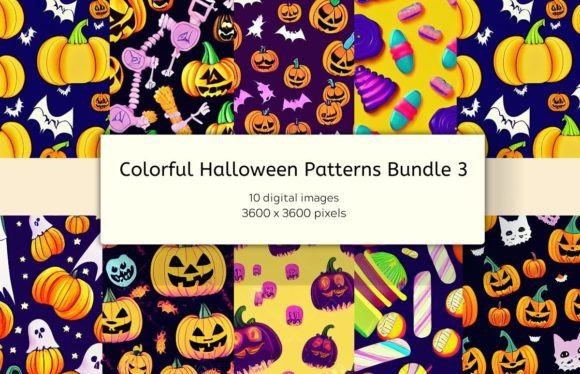
Imagine opening a digital folder and finding ten vibrant, high-resolution seamless patterns—each bursting with playful pumpkins, grinning jack-o’-lanterns, candy-colored ghosts, sly black cats, swirling bats, and whimsical haunted houses—all rendered in the unmistakable, joyful energy of Lisa Frank’s aesthetic. That’s Colorful Halloween Patterns Bundle 3: a curated set of psychedelic Halloween digital papers designed not just for seasonal decoration, but for real creative work.
These aren’t generic clipart repeats. Each pattern is thoughtfully composed to balance visual interest with usability—no awkward seams, no pixelated edges, and no muddy color transitions. At 3600×3600 pixels and 300 DPI, they scale cleanly from tiny nail wraps to large-format party backdrops. And because they’re delivered as JPG files, they open instantly in nearly any design tool—no special software or plugins required.
Why These Patterns Stand Out for Real Projects
Most Halloween graphics lean into either spooky minimalism or cartoonish simplicity. Colorful Halloween Patterns Bundle 3 occupies a rare middle ground: it’s bold enough to command attention, yet structured enough to support legible text and layered design elements. The Lisa Frank influence isn’t just about neon—it’s about clarity, contrast, and cheerful confidence. That makes these patterns especially effective when you need your message to land without sacrificing personality.
For educators, that means printable classroom banners that energize students without overwhelming them. For small business owners, it’s packaging that stands out on crowded shelves—or on Instagram feeds—without looking gimmicky. For scrapbookers and cardmakers, it’s backgrounds that hold up under photos, die cuts, and hand-lettered details.
Creative Uses Across Audiences and Platforms
Different users find different value in the same resource—and Colorful Halloween Patterns Bundle 3 adapts naturally. Here’s how:
- Designers & Freelancers: Use the patterns as base layers for social media templates (Instagram Stories, Pinterest pins), email headers, or website section backgrounds. Pair a candy-striped pattern with clean sans-serif type for a modern “Trick or Treat” promo banner—then reuse the same pattern in a subtle 15% opacity overlay behind product photos.
- Educators & Homeschoolers: Print full-sheet patterns as themed writing paper, spelling test borders, or behavior chart backgrounds. Laminate a sheet for reusable stationery trays or cut into shapes for sorting games (e.g., “ghosts go in the purple bin,” “bats go in the orange bin”).
- Small Business Owners: Apply patterns to digital product labels (candles, bath bombs, stickers), printable gift tags, or even temporary tattoos for event giveaways. One café owner used the witch-hat pattern on coffee sleeve templates—customers posted photos, extending organic reach.
- DIY Crafters & Makers: Scale patterns down for bottle cap charms, decoupage on wooden boxes, or iron-on transfers for tote bags. Because each image is seamless, repeating across curved surfaces (like mugs or phone cases) stays visually cohesive.
- Bloggers & Content Creators: Embed patterns as blog post dividers, Pinterest pin backgrounds, or video thumbnail textures. A lifestyle blogger used the skeleton motif subtly behind recipe titles—spooky but not distracting, reinforcing her “Halloween Entertaining” series without needing new photography each time.
Practical Tips for Consistent, Audience-Friendly Results
Great patterns are only as effective as how you use them. Keep these principles in mind:
- Respect contrast and hierarchy. If placing text over a busy pattern, add a semi-transparent white or black overlay (10–20% opacity) beneath the type layer. This preserves readability without muting the design.
- Test print before bulk production. Even high-DPI files can shift in tone on different printers or paper stocks. Run a single 8.5×11 test sheet first—especially if using the patterns for invitations or packaging where color accuracy matters.
- Stay platform-aware. For web use, compress JPGs using tools like Squoosh or TinyPNG—these patterns retain impact even at ~70% quality. For print, keep files at full resolution and embed color profiles (sRGB for general use, CMYK only if your printer specifies it).
- Build variation intentionally. Don’t default to using all ten patterns equally. Pick one as your “hero” (e.g., the candy-and-bat combo for a candy shop launch), then use two others as accents—on borders, icons, or secondary pages—to create rhythm without visual fatigue.
More Than Just Backgrounds—A Toolkit for Tone
Halloween design often defaults to fear, nostalgia, or irony. Colorful Halloween Patterns Bundle 3 offers an alternative: joyfully unapologetic celebration. That tone resonates differently depending on your audience. A children’s library might use the ghost-and-pumpkin pattern for a “Spooky Storytime” flyer—friendly, inviting, clearly age-appropriate. A boutique skincare brand could reinterpret the same pattern in muted pastels (via desaturation and hue shift) for limited-edition Halloween packaging—keeping the structure but softening the energy.
This flexibility isn’t accidental. Each pattern avoids overly literal depictions—no blood, no cobwebs, no jump-scares—making them accessible for schools, faith-based groups, corporate events, and inclusive community celebrations. You’re not just buying backgrounds; you’re acquiring visual vocabulary that communicates fun, creativity, and approachability.
Getting Started—No Design Degree Required
You don’t need advanced skills to benefit from Colorful Halloween Patterns Bundle 3. Start simple:
- Open one JPG in Canva, Google Slides, or PowerPoint. Set it as a slide background. Add your text or logo. Done.
- Drag a pattern into Procreate or Photoshop, then use it as a fill layer inside a shape mask—perfect for custom stickers or social media avatars.
- Print a sheet, cut out motifs by hand, and use them in mixed-media collages or handmade cards.
The goal isn’t perfection—it’s momentum. One teacher printed four patterns on cardstock, laminated them, and used them as rotating centerpieces for her October literacy stations. A jewelry maker scanned sections of the bat pattern into her CAD software to laser-cut matching earring backs. Another user tiled the haunted house motif across a Zoom virtual background—guests asked where she got it, leading to organic referrals.
That’s the quiet power of well-made digital paper: it doesn’t shout for attention. It supports your voice, amplifies your ideas, and gives people a reason to pause—not because it’s loud, but because it feels intentional, joyful, and unmistakably *yours*.