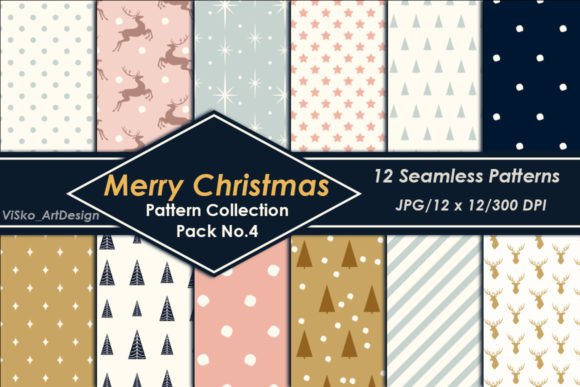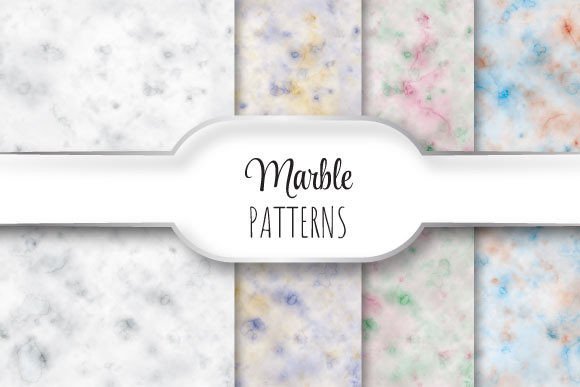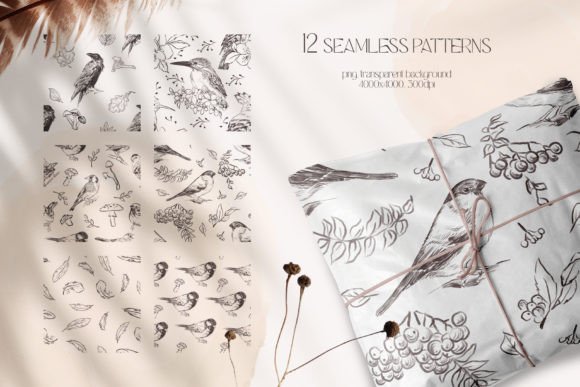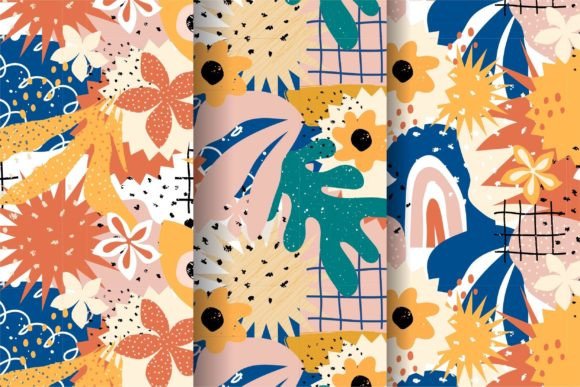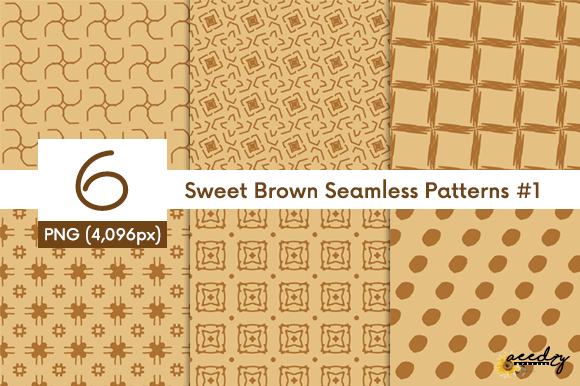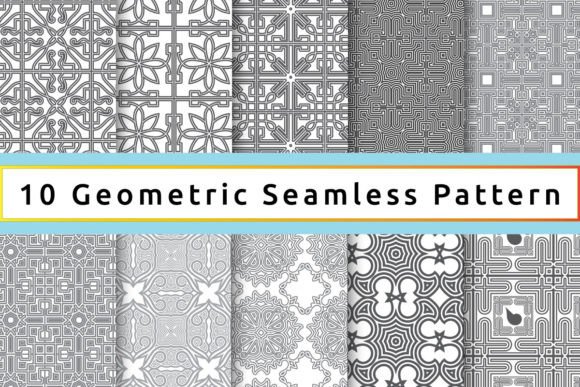
Seamless Colorful Geometrical Patterns: Design Versatility Meets Technical Precision
Seamless colorfully geometrical patterns represent a foundational element in modern visual communication—bridging aesthetics, functionality, and reproducibility. Unlike standalone illustrations or photographic assets, these patterns are engineered to tile infinitely without visible seams, enabling consistent, scalable coverage across surfaces of any dimension. Their “colorful” quality isn’t merely decorative; it reflects intentional chromatic harmony, contrast balance, and perceptual clarity—qualities that directly impact legibility, emotional resonance, and brand coherence. Meanwhile, the “geometrical” foundation ensures structural integrity: angles, symmetry, repetition, and proportion are calculated with mathematical fidelity, making each design inherently adaptable to grids, vectors, and responsive layouts.
Why Seamless Matters—Beyond Aesthetics
The term “seamless” carries technical weight. In practice, it means the top edge aligns perfectly with the bottom, and the left matches the right—no gaps, no misaligned lines, no pixelated artifacts at tile boundaries. This precision is non-negotiable for professional applications. Consider a textile designer developing fabric for mass production: even a 0.5-pixel offset between tiles becomes glaringly visible across a 3-meter bolt of cloth. Similarly, a publisher creating an adult coloring book must ensure every page’s background pattern flows continuously from one spread to the next—no jarring breaks that disrupt meditative focus or artistic flow.
This reliability stems from how the files are constructed—not just visually, but structurally. Each pattern in this collection is built using vector-based workflows (EPS), ensuring infinite scalability without loss of fidelity. The inclusion of high-resolution raster variants (JPG and PNG at 300 DPI) supports print-ready output while preserving transparency where needed—critical for layered design work in tools like Adobe Photoshop or Affinity Designer. That dual-format availability reflects a deep understanding of real-world production pipelines, where designers often move fluidly between vector refinement and pixel-perfect compositing.
Applications Across Disciplines
The utility of seamless colorful geometrical patterns extends far beyond surface decoration. Their adaptability makes them indispensable across diverse fields—each leveraging different attributes of the same underlying asset.
Adult Coloring Books & Therapeutic Design
In mental wellness publishing, geometric patterns serve as both structure and invitation. Symmetrical tessellations—like interlocking hexagons or nested triangles—provide cognitive scaffolding that supports concentration and reduces decision fatigue. When rendered in soft, harmonious palettes (e.g., muted teals, warm ochres, and slate greys), they encourage calm engagement rather than visual overload. Because these patterns are seamless, multi-page spreads maintain continuity—allowing users to color across gutter margins without encountering mismatched edges. Educators and occupational therapists also integrate such pages into fine-motor skill development, where predictable repetition reinforces hand-eye coordination and spatial reasoning.
Print-on-Demand (POD) Product Development
For entrepreneurs and small studios using POD platforms—whether for apparel, stationery, home goods, or accessories—seamless patterns dramatically reduce prepress friction. A single EPS file can generate dozens of SKUs: a triangular lattice may become a duvet cover, a phone case, a tote bag, and a set of greeting cards—all without redesigning or re-cropping. The 300 DPI resolution guarantees crisp output on everything from cotton canvas to ceramic mugs. Moreover, because the geometry is mathematically regular, scaling remains distortion-free—even when stretched over curved surfaces like water bottles or laptop sleeves.
Book Cover & Editorial Design
Contemporary book cover design increasingly favors bold, abstract backdrops that convey genre tone without literal illustration. A vibrant, asymmetric polygonal pattern—layered subtly beneath title typography—can evoke innovation (for tech nonfiction), rhythm (for poetry collections), or complexity (for academic texts). Seamless tiling allows designers to extend the motif across spine and flaps without interruption, reinforcing physical cohesion. When exported as transparent PNGs, these patterns integrate cleanly into layered mockups—enabling rapid A/B testing of typographic hierarchy against varying background densities and color temperatures.
Educational & Research Visualizations
Geometric patterns appear in unexpected scholarly contexts. Mathematics educators use tessellation-based visuals to demonstrate Euclidean vs. non-Euclidean space. Cognitive scientists employ repetitive, low-contrast patterns in eye-tracking studies to calibrate baseline fixation behavior. Even architecture firms repurpose modular geometric motifs as conceptual underlays in presentation decks—symbolizing structural logic or systemic interconnection. Here, the “colorful” aspect serves functional coding: assigning distinct hues to specific shape families helps audiences parse relationships at a glance—much like heat maps or network diagrams.
Technical Characteristics That Enable Real-World Use
Not all geometric patterns are equally deployable. What distinguishes this collection is its attention to production-grade specifications:
- Vector-native construction (EPS): Enables resizing for billboard graphics or micro-printed labels without degradation.
- 300 DPI raster exports (JPG/PNG): Meets commercial printing standards—no upscaling artifacts, no moiré effects on halftone screens.
- Transparency support (PNG): Allows non-destructive layering in digital workflows—essential for UI overlays, social media templates, or augmented reality assets.
- Color-managed consistency: RGB and CMYK-safe palettes ensure predictable rendering across devices and print runs.
- Modular scalability: Patterns are designed with repeat units small enough to render efficiently in web CSS (
background-image: url(...)) yet large enough to avoid excessive tiling noise on high-resolution displays.
These aren’t theoretical advantages—they’re responses to observed pain points. For instance, many free pattern libraries deliver low-DPI JPGs that blur when printed at book-cover size; others offer SVGs with embedded raster elements that break upon export. This collection avoids those compromises by maintaining strict format discipline.
Design Philosophy Behind the Palette & Geometry
“Colorful” does not mean chaotic. Each pattern applies color theory deliberately: complementary pairs enhance vibrancy for energetic branding; analogous schemes foster tranquility for wellness applications; triadic groupings support accessibility by ensuring sufficient contrast between adjacent shapes. Hue saturation and lightness are calibrated to meet WCAG 2.1 AA contrast ratios when overlaid with text—making them viable for inclusive educational materials.
Similarly, geometry is never arbitrary. Rotational symmetry (e.g., 4-fold or 6-fold) supports balanced visual weight in circular compositions like logos or app icons. Translational repetition ensures predictability in long-scrolling web interfaces. Fractal-inspired recursion—where smaller shapes echo larger ones—adds depth without clutter, ideal for luxury packaging or premium report design.
Workflow Integration Tips
How creators actually use these assets matters more than their theoretical potential. Here’s how professionals embed them efficiently:
- For Adobe Illustrator users: Place the EPS file, then use Object > Pattern > Make to define custom swatches—enabling one-click application across multiple objects and artboards.
- In Canva or Figma: Upload the PNG variant and apply it as a background fill; adjust opacity or blend mode (e.g., Multiply for subtle texture) without altering the base pattern.
- For developers: Convert the PNG to a data URI or host it as a lightweight CSS background image—ideal for loading animated geometric loaders or interactive hover states.
- In Procreate or Clip Studio Paint: Import the high-res PNG as a base layer, then use clipping masks to confine coloring or painting within individual shapes—preserving clean edges throughout the creative process.
Each method respects the asset’s inherent strengths: vector fidelity where scalability is paramount, pixel precision where texture and grain matter, and transparency where layering flexibility is essential.
Looking Ahead: Trends Shaping Pattern Use
Emerging practices suggest growing demand for patterns that do more than decorate. Generative design tools now allow users to algorithmically tweak parameters—rotation angle, spacing density, hue range—creating derivative works from base seamless files. This positions high-quality source patterns as foundational “seed data” rather than static end products.
Additionally, sustainability-conscious brands increasingly favor geometry over photorealism: vector-based patterns require less storage, lower bandwidth, and zero licensing ambiguity—unlike stock photography. As AI-assisted design accelerates, human-curated, technically rigorous pattern libraries gain renewed value—not as replacements for automation, but as trusted anchors amid algorithmic variability.
Ultimately, seamless colorful geometrical patterns succeed not because they are trendy, but because they solve persistent problems: how to fill space meaningfully, scale without compromise, and communicate structure through form and color—across mediums, disciplines, and audiences. Their quiet precision makes them invisible in the best possible way: working reliably behind the scenes, so creators can focus on what matters most—their message, their craft, their audience’s experience.